Electrician
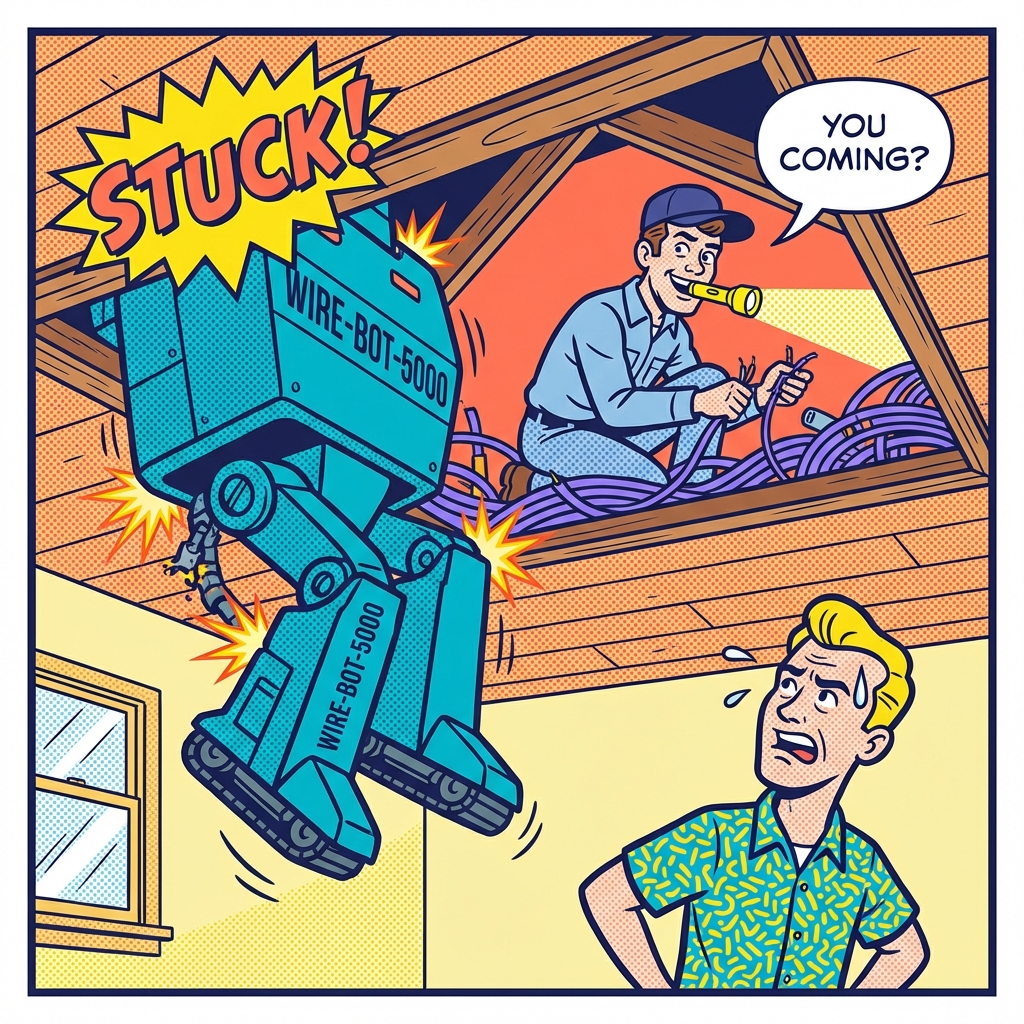
Will robots replace electricians? At 20% risk, probably not. Robots can't crawl through attics or troubleshoot mystery wiring—and the trade shortage means massive opportunity.
Robots can't crawl through attics, troubleshoot mystery wiring, or work in the chaos of real construction sites. The electricians who win are already winning—skilled trades are in massive demand.
Will Robots Take My Electrician Job?
You're here because you've seen headlines about automation in construction and wondered if your trade was next. Here's what's actually happening.
We've Been Here Before: Technology Created MORE Electrical Work
In the 1950s, pre-fab electrical systems were going to eliminate the need for on-site electricians. Then modular construction. Then smart home technology.
The electrician shortage is so severe that contractors routinely turn down work.
Why? Because homeowners don't pay for wire connections. They pay for:
- Someone who won't burn their house down
- Troubleshooting the mystery problem in a 1960s panel
- Working in cramped, dirty, unpredictable spaces
- Code compliance and inspection approval
- The judgment call when the blueprint doesn't match reality
- Professional liability if something goes wrong
Robots can wire a factory-built panel. They can't figure out why the lights flicker when it rains.
What Robots Can Actually Do Today
Tasks Robots Win At:
- Factory panel assembly - Pre-wired components in controlled environments
- Cable pulling in conduit - Long straight runs with consistent paths
- Repetitive assembly - Identical electrical boxes, mass production
- Testing/diagnostics - Automated circuit testing equipment
What Humans Still Dominate:
- Troubleshooting - Diagnosing mystery problems in existing systems
- Retrofitting - Working in finished buildings, around obstacles
- Custom installations - Adapting to site-specific conditions
- Code interpretation - Judgment calls on compliance
- Physical access - Attics, crawl spaces, behind walls
- Customer interaction - Explaining problems, earning trust
The Tasks Table: Robot vs Human
| Task | Robot Capability | Human Advantage | Winner |
|---|---|---|---|
| Factory pre-assembly | 85% | 15% - quality checking | Robot |
| Automated testing | 80% | 20% - interpreting results | Tie |
| New construction rough-in | 40% | 60% - site adaptation | Human |
| Troubleshooting | 15% | 85% - diagnosis skills | Human |
| Retrofit work | 10% | 90% - physical constraints | Human |
| Code compliance | 25% | 75% - judgment + inspection | Human |
| Customer service | 10% | 90% - trust + communication | Human |
| Emergency repairs | 5% | 95% - rapid response | Human |
| Complex installations | 20% | 80% - problem-solving | Human |
The Counter-Narrative: Electricians Are MORE In Demand Than Ever
Here's the surprising reality:
80,000 electrician shortage in the US Average age: 43 and rising EV charging stations need electricians everywhere Solar installation is booming Infrastructure bill funding $65B in electrical upgrades
Automation isn't threatening electricians—the real threat is not enough people entering the trade.
The real transformation:
- Smart home technology creates new work
- EV infrastructure is a massive growth area
- Solar and battery storage need skilled installers
- Aging electrical systems need upgrades everywhere
The Bottom Line
Yes, factory pre-assembly and diagnostic tools will improve. No, robots won't crawl through your attic to troubleshoot your 1970s wiring.
The electricians who thrive will be:
- Certified in growth areas (EV, solar, smart home)
- Master troubleshooters (solving what robots can't diagnose)
- Business-minded (capitalizing on the shortage)
- Adaptable (learning new systems as they emerge)
Your move: Get your EV charging certification this quarter. The electricians who struggle won't be replaced by robots—they'll just miss the biggest opportunity in decades.
What's Next?
Ready to future-proof your career? Our AI Adaptation Guide covers the skills and strategies that matter across every profession—from embracing AI tools to doubling down on uniquely human strengths.