Engineering Manager
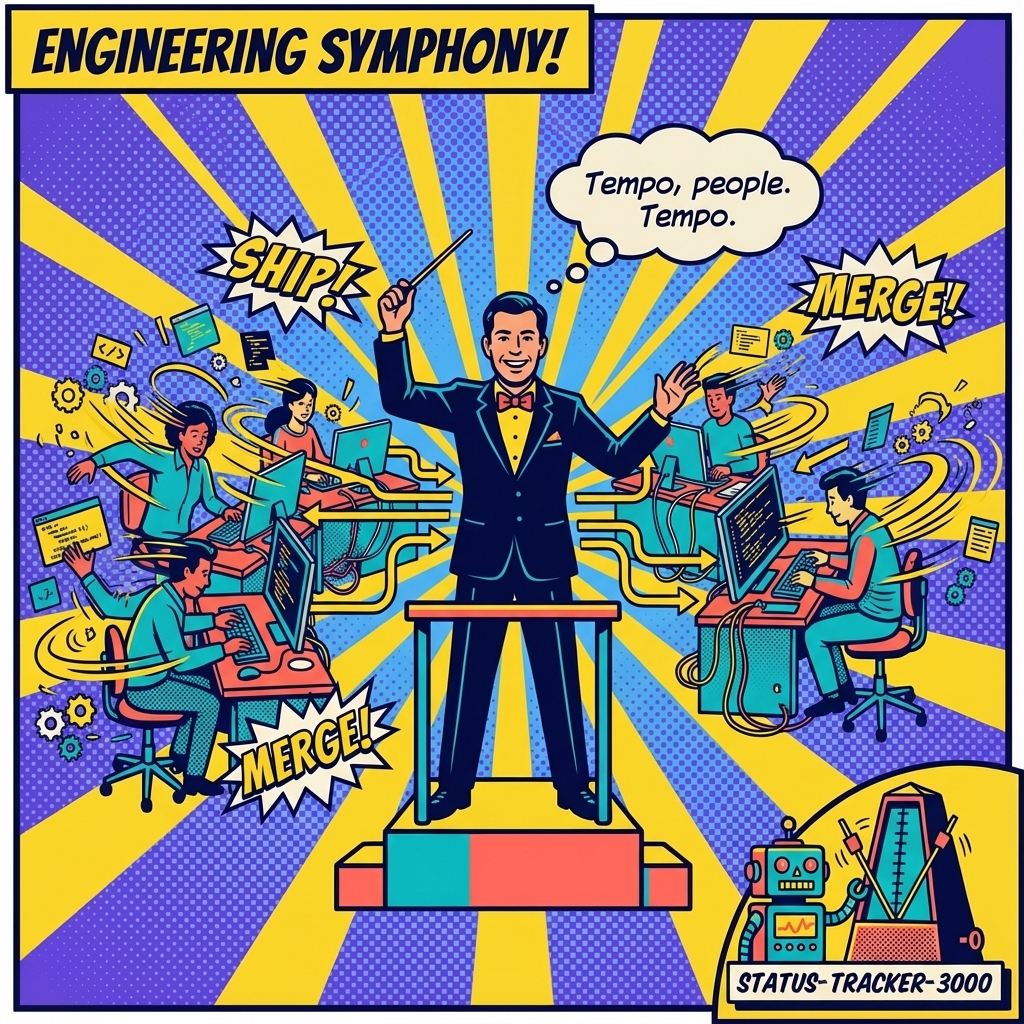
Will AI replace engineering managers? At 25% risk, probably not. AI automates status updates, not bottleneck removal. The managers who win will build coordination systems.
AI automates status updates, not bottleneck removal. The managers who thrive will build coordination systems, not just track progress.
Will Robots Take My Engineering Manager Job?
You've watched AI write code that your junior devs used to handle, and you're wondering if the next step is AI running your standups. Here's the counterintuitive truth.
We've Been Here Before: Agile Didn't Replace Managers
In the 2000s, Agile methodology was supposed to make managers obsolete. "Self-organizing teams" would manage themselves.
Companies discovered that removing managers created chaos, not efficiency. Someone still needed to:
- Remove blockers that teams couldn't solve alone
- Navigate organizational politics
- Make resource allocation decisions
- Connect technical work to business outcomes
AI is the same story. It makes individuals faster, but teams still need someone designing the coordination layer.
The 5x Engineer Paradox
Here's the data that should make you optimistic:
A team gave every engineer AI coding tools. Individual productivity went up. Team velocity barely moved.
Why? Because coordination was the bottleneck, not coding speed:
- 60% of stories needed clarification
- PR reviews took 2+ days
- Work allocation remained invisible until retrospectives
The solution wasn't faster engineers—it was automating the coordination layer:
- Template-driven task creation (clearer requirements)
- AI-assisted code reviews (faster feedback loops)
- Automated sprint reports (visible allocation problems)
Results: Sprint velocity: 60% → 85%. Management overhead: -50%.
The manager didn't become obsolete. They shifted from tracking status to designing better systems.
What AI Can Actually Do Today
Tasks AI Wins At:
- Status aggregation - Pulling data from Jira, GitHub, Slack (90%+ faster)
- Report generation - Sprint summaries, velocity charts, burndown
- Meeting scheduling - Finding optimal times, setting agendas
- Documentation - Meeting notes, decision logs, process docs
- Basic code review triage - Catching obvious issues before human review
What Humans Still Dominate:
- Bottleneck identification - Seeing what's actually slowing the team
- Technical strategy - Deciding what to build vs buy vs skip
- People development - Growing engineers into senior engineers
- Stakeholder management - Translating business pressure into technical priorities
- Conflict resolution - Navigating interpersonal dynamics
- Organizational navigation - Getting resources, protecting the team
The Tasks Table: Robot vs Human
| Task | AI Capability | Human Advantage | Winner |
|---|---|---|---|
| Status tracking | 90% | 10% - interpretation | AI |
| Report generation | 85% | 15% - narrative | AI |
| Meeting scheduling | 80% | 20% - relationship context | AI |
| Code review triage | 60% | 40% - architectural judgment | Tie |
| Bottleneck removal | 15% | 85% - organizational context | Human |
| Technical strategy | 20% | 80% - business alignment | Human |
| People development | 10% | 90% - relationship building | Human |
| Stakeholder management | 15% | 85% - trust + politics | Human |
| Team culture | 5% | 95% - authenticity required | Human |
The Counter-Narrative: AI Makes Coordination MORE Valuable
The counterintuitive insight:
Faster individual work = more coordination needed
When engineers ship 3x faster:
- More PRs need review
- More decisions need making
- More conflicts need resolving
- More communication needs facilitating
AI doesn't reduce the need for coordination—it increases it. The manager who can design systems that scale coordination becomes essential.
The Bottom Line
Yes, AI will automate your status meetings and report generation. No, AI won't remove the bottlenecks that actually slow teams down.
The engineering managers who thrive will be:
- System designers (building coordination processes, not just tracking them)
- Bottleneck removers (solving problems AI can identify but not fix)
- People developers (growing engineers, not just managing them)
- Strategic thinkers (connecting technical work to business outcomes)
Your move: Automate your status tracking this week. Use the freed time to remove one bottleneck your team has been complaining about. That's the job AI can't do.
What's Next?
Ready to future-proof your career? Our AI Adaptation Guide covers the skills and strategies that matter across every profession—from embracing AI tools to doubling down on uniquely human strengths.