Product Marketer
Can AI replace product marketers? At 45% risk, research and content are automating. But positioning products to win markets? That's still human territory.
AI can analyze competitors, generate messaging variants, and automate launch checklists. But understanding why enterprise buyers trust one solution over another—and translating complex products into compelling stories? That requires human judgment AI can't replicate.
Can AI Take My Product Marketing Job?
You've watched AI generate competitive battle cards, write product descriptions, and analyze win/loss data faster than your team ever could. When algorithms can research markets and create messaging variants instantly, what's left for the human bridge between product and customer? Here's what's actually happening.
We've Been Here Before: Sales Tools Didn't Replace Product Marketers
In the 2010s, CRM systems with built-in intelligence were going to automate sales enablement. Then conversation intelligence platforms would eliminate the need for human competitive analysis. Then product-led growth would make go-to-market strategy obsolete.
Product marketing has become one of the most strategic functions in tech companies, with PMMs earning premium salaries precisely because the role requires judgment no tool can replicate.
Why? Because companies don't pay for feature lists and battle cards. They pay for:
- Understanding why buyers choose one solution over another
- Translating complex products into stories that resonate
- Knowing which deals to pursue and which to walk away from
- Building the relationships between product, sales, and customers
- Making positioning bets that differentiate in crowded markets
- Deciding what NOT to say as much as what to emphasize
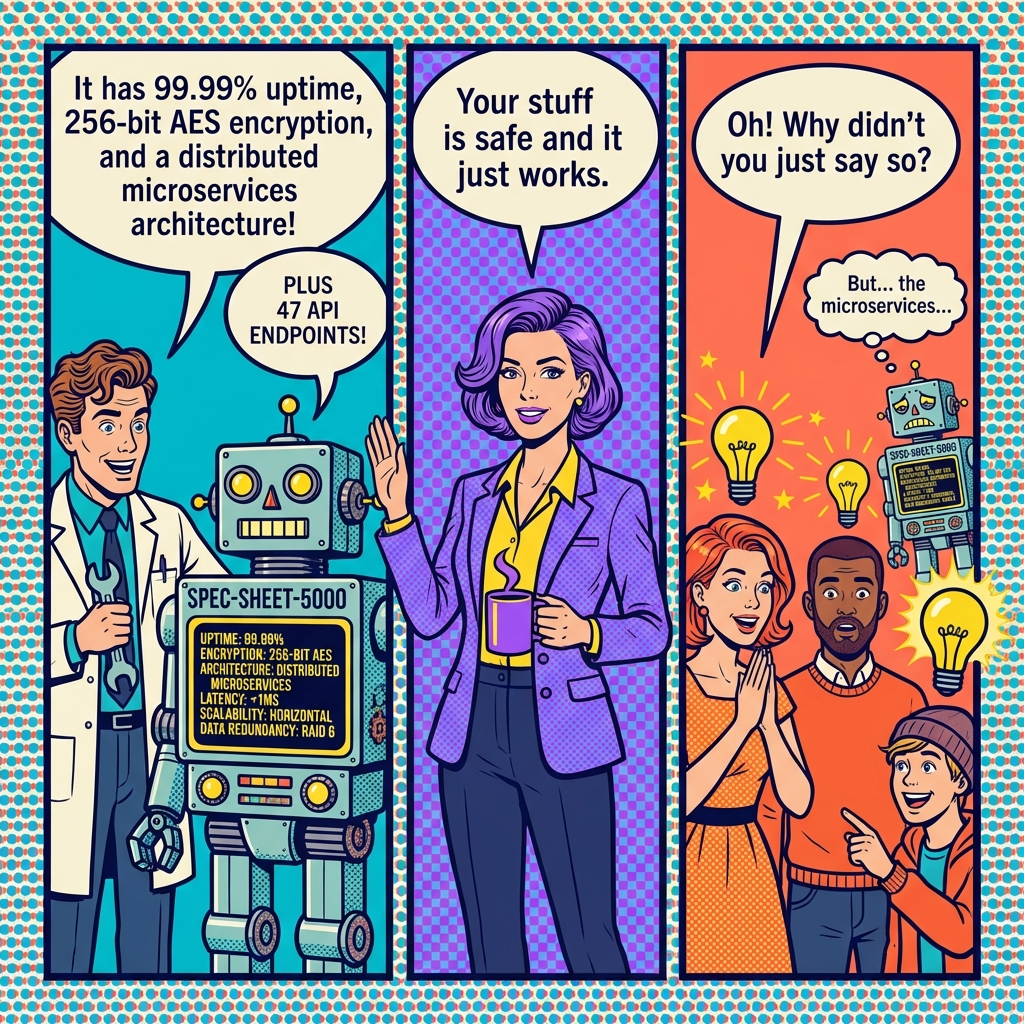
AI can generate 50 messaging variants for your product launch. It can't tell you which one will make enterprise procurement teams feel safe choosing you over the incumbent.
What AI Can Actually Do Today
Tasks AI Wins At:
- Competitive intelligence - Monitoring competitor announcements, pricing, and positioning
- Content generation - Product descriptions, one-pagers, email sequences
- Win/loss analysis - Identifying patterns in deal outcomes from CRM data
- Market research - Synthesizing analyst reports, reviews, and market data
- Launch coordination - Automated checklists, timeline tracking, asset distribution
- Sales asset creation - Battle cards, objection handlers, comparison sheets
What Humans Still Dominate:
- Product positioning - Deciding how to position against competitors and alternatives
- Messaging strategy - The core narrative that makes products compelling
- Sales relationship - Enabling reps, getting feedback, building trust
- Customer insight - Understanding the emotions behind buying decisions
- Launch strategy - Deciding timing, channels, and emphasis
- Pricing input - Balancing value perception with competitive reality
The Tasks Table: Robot vs Human
These are directional estimates based on current capabilities—not scientific measurements. Your mileage will vary by company, industry, and budget.
| Task | AI Capability | Human Advantage | Winner |
|---|---|---|---|
| Competitive monitoring | 90% | 10% - strategic implications | AI |
| Product descriptions | 75% | 25% - differentiation | AI |
| Launch checklists | 85% | 15% - prioritization | AI |
| Battle card generation | 70% | 30% - positioning nuance | Tie |
| Win/loss patterns | 65% | 35% - root cause insight | Tie |
| Market sizing | 60% | 40% - segment judgment | Tie |
| Product positioning | 25% | 75% - strategic vision | Human |
| Messaging strategy | 30% | 70% - emotional resonance | Human |
| Sales enablement | 20% | 80% - relationship + context | Human |
| Pricing strategy | 35% | 65% - market intuition | Human |
| Customer interviews | 15% | 85% - rapport + insight | Human |
Risk by Experience Level
Product marketing risk varies by seniority and specialization:
Entry-Level Product Marketers (60% Risk)
Moderate-high risk. Junior PMM roles focused on content and research face significant automation.
What's disappearing:
- Content creation roles
- Basic competitive research
- Launch coordination tasks
- Sales asset maintenance
Your move: Build customer interview skills and sales relationships early—AI can't replace rapport.
Mid-Level Product Marketers (45% Risk)
The transition point. You're expected to own positioning and work directly with sales—both resistant to automation.
What's changing:
- Research phase accelerates
- More time for positioning work
- Sales relationship more critical
- Strategic expectations rising
Your move: Become the person who translates customer insights into positioning decisions—that's AI-proof.
Senior Product Marketers (30% Risk)
Strategy-protected. The positioning decisions, go-to-market strategy, and sales leadership that define senior PMM work are deeply human.
What's changing:
- AI provides faster insights
- Higher expectations for differentiation
- Cross-functional influence more important
- Launch velocity increasing
Your move: Position yourself as the strategic bridge between product vision and market reality—no algorithm can navigate those politics.
The Strategic Work AI Can't Touch
Product marketing sits at the intersection of product, sales, and market—a position that requires human judgment at every turn:
Positioning Decisions:
- Are we the enterprise-grade alternative or the disruptive newcomer?
- Do we lead with ROI, ease of use, or innovation?
- Which competitors do we name, which do we ignore?
Go-to-Market Strategy:
- Do we launch big or iterate quietly?
- Which segments do we target first?
- How do we balance new customer acquisition with expansion?
Sales Partnership:
- What objections should reps handle vs. escalate?
- When is a prospect not a good fit—even if they have budget?
- How do we get product feedback from the field?
AI can generate inputs for these decisions. Making them requires understanding your specific market, customers, and company in ways algorithms can't.
The Counter-Narrative: Product Complexity Makes PMMs More Valuable
Here's what the AI-replaces-PMMs narratives miss:
More products means more need for differentiated positioning More competitors means harder positioning decisions More buying committee members means more stakeholder messaging Faster product cycles means more launches to manage
As products become more commoditized, positioning becomes the differentiator—which is why strategic product marketing remains valuable even as tactical work automates.
The real transformation:
- Research and content become faster (AI handles first drafts)
- Positioning and strategy become premium (humans make the calls)
- PMMs shift from content creators to strategic advisors
- Sales partnership becomes the differentiator
The Bottom Line
Yes, AI will automate competitive research, content generation, and launch coordination. No, AI won't replace the product marketer who understands why buyers choose one product over another, builds the relationship between product and sales, and makes positioning bets that differentiate in crowded markets.
The product marketers who thrive will be:
- Strategically positioned (focused on positioning, not just content)
- Sales-partnered (trusted by the field, not just marketing)
- Customer-obsessed (understanding why buyers buy, not just what they buy)
- AI-leveraged (using tools for research and content, freeing time for strategy)
Your move: This week, use AI to generate competitive intelligence on your top three competitors. Compare what the AI surfaces to what you know from sales conversations. The PMMs who struggle won't be replaced by AI—they'll lose to PMMs who combine AI-powered research with human customer intuition.
What's Next?
Ready to future-proof your career? Our AI Adaptation Guide covers the skills and strategies that matter across every profession—from embracing AI tools to doubling down on uniquely human strengths.
Sources & Further Reading
Industry Research:
- Product Marketing Alliance - State of Product Marketing 2024 - Annual survey on PMM team structures, KPIs, and strategic priorities
- Digital Marketing Institute (2025) - AI Marketing Stats - 50% of marketers create content using AI; 45% use AI to brainstorm content concepts
Labor Market Analysis:
- U.S. Bureau of Labor Statistics (2024) - Occupational Outlook: Advertising, Promotions, and Marketing Managers - Projects 6% employment growth from 2024 to 2034
Technology & Tools:
- Klue, Crayon - AI-powered competitive intelligence platforms
- Gong, Chorus - Conversation intelligence for sales enablement
- Jasper, Copy.ai - AI content generation for product messaging
Last Updated: January 2026