Teacher
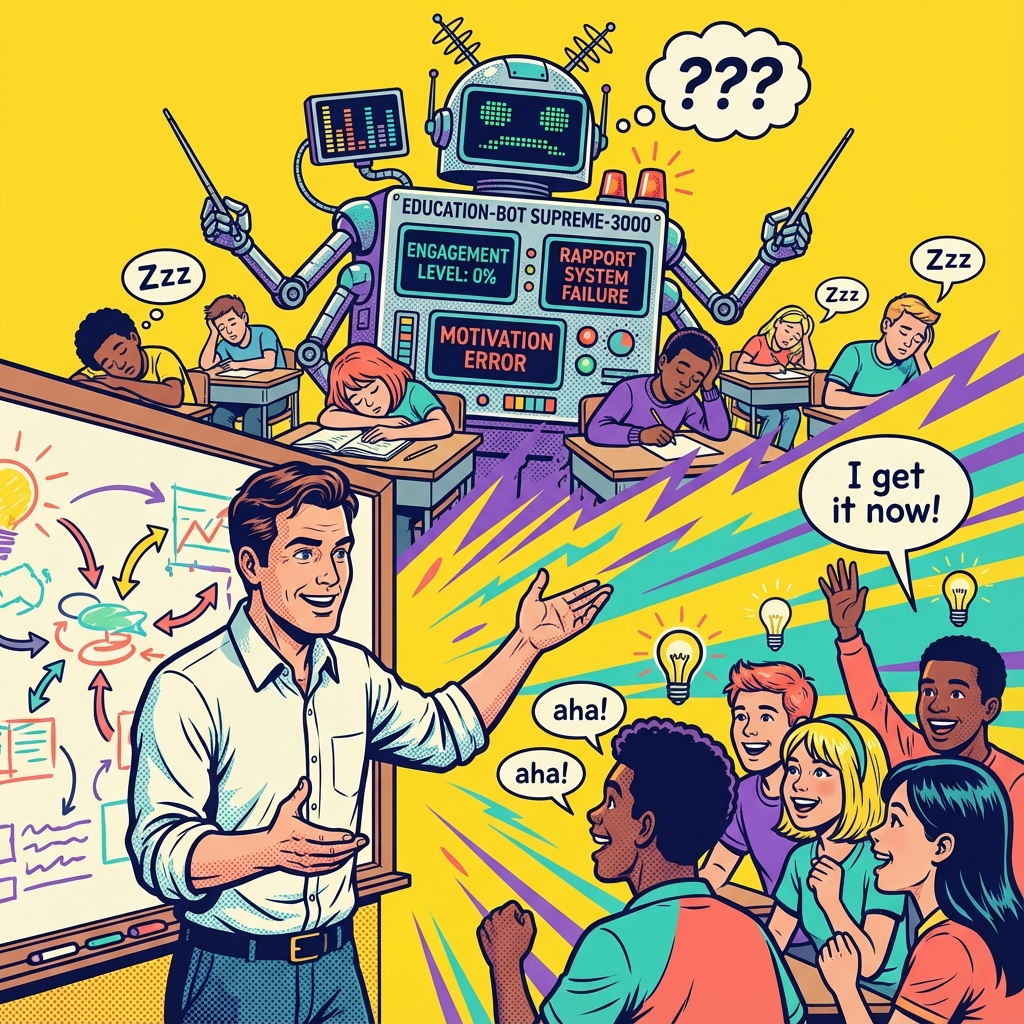
Can AI replace teachers? At 30% risk, content delivery is changing. But the teacher who believes in a struggling student? Irreplaceable. See the full analysis.
AI can deliver content, but it can't inspire a struggling student to keep trying. The teachers who win will spend less time grading and more time connecting.
Can Robots Take My Teaching Job?
You're here because you saw another article about AI tutors and personalized learning algorithms, and you wondered if your classroom was about to become obsolete. Here's what's actually happening.
We've Been Here Before: YouTube Didn't Replace Teachers
In the 2010s, MOOCs were going to democratize education and eliminate the need for classrooms. Then Khan Academy. Then educational apps promising personalized learning.
There are MORE teachers today than before any of those innovations—and the best ones are more valued than ever.
Why? Because students don't pay for information. They pay for:
- Someone who sees their potential
- Motivation when they want to give up
- Real-time feedback and encouragement
- Accountability and structure
- The "aha moment" a human can recognize and nurture
- A safe space to fail and try again
AI can explain photosynthesis. It can't notice when a kid's eyes light up with understanding.
What AI Can Actually Do Today
Tasks AI Wins At:
- Grading objective work - Multiple choice, math problems (instant feedback)
- Content delivery - Lectures, explanations, demonstrations
- Personalized practice - Adaptive problem sets based on skill level
- Administrative tasks - Attendance, scheduling, report generation
- Language practice - Conversation partners for language learning
What Humans Still Dominate:
- Inspiration - The spark that makes a student care about a subject
- Emotional support - Recognizing when a student is struggling beyond academics
- Critical thinking - Teaching HOW to think, not just WHAT to know
- Classroom dynamics - Managing 25 different personalities and needs
- Mentorship - Life guidance that shapes who students become
- Creative teaching - Adapting on the fly when the lesson isn't working
The Tasks Table: Robot vs Human
| Task | AI Capability | Human Advantage | Winner |
|---|---|---|---|
| Multiple choice grading | 95% | 5% - edge cases | AI |
| Content explanation | 70% | 30% - student confusion signals | Tie |
| Personalized practice | 80% | 20% - knowing when to push | Tie |
| Essay feedback | 60% | 40% - nuance, encouragement | Tie |
| Student engagement | 20% | 80% - reading the room | Human |
| Emotional support | 10% | 90% - genuine care | Human |
| Classroom management | 15% | 85% - human presence | Human |
| Parent communication | 30% | 70% - relationship building | Human |
| Life mentorship | 5% | 95% - wisdom, experience | Human |
The Counter-Narrative: AI Frees Teachers to Actually Teach
Here's the surprising reality:
Teachers spend only 50% of their time actually teaching The rest: Grading, paperwork, admin, planning, meetings Students need: More one-on-one time, not less
AI isn't replacing teachers—it's rescuing them from busywork.
The real transformation:
- AI grading = more time for meaningful feedback
- AI lesson planning = more time for creative instruction
- AI administrative tasks = more time with struggling students
- Personalized AI practice = teachers focus on the students who need human help most
The Bottom Line
Yes, AI will handle more content delivery and grading. No, AI won't replace the teacher who believes in a student when they don't believe in themselves.
The teachers who thrive will be:
- AI-augmented (using tools to eliminate busywork)
- Relationship-focused (investing saved time in students)
- Creativity-centered (making learning engaging and relevant)
- Mentorship-driven (shaping who students become, not just what they know)
Your move: Try an AI grading tool this week. The teachers who struggle won't be replaced by robots—they'll burn out from paperwork while their colleagues use AI to actually teach.
What's Next?
Ready to future-proof your career? Our AI Adaptation Guide covers the skills and strategies that matter across every profession—from embracing AI tools to doubling down on uniquely human strengths.